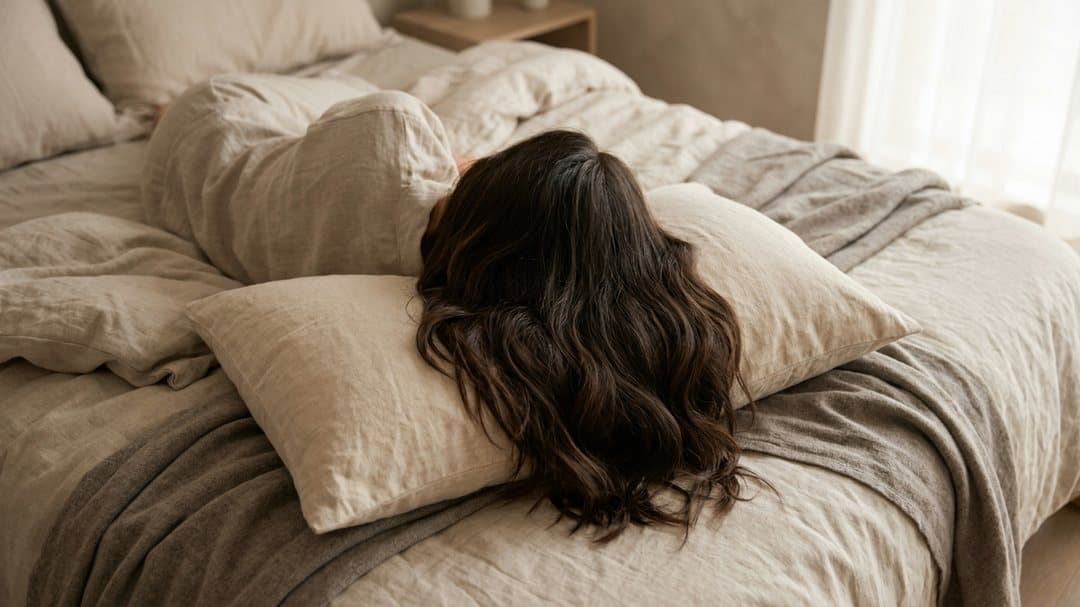
Eight hours on a pillow is the longest single thing that happens to your hair, and the only part of your routine nobody supervises. What goes on is simple: your head turns, your hair drags against the fabric, and sections shift against each other. That is where the knots and the morning frizz come from.
So there is only one job, which is to reduce friction and movement.
The cheapest fix is the pillowcase. Cotton catches hair; silk and satin let it slide. The difference shows up on the first night, and you pay for it once. If you would rather not change your bedding, a cap or a scarf in the same fabrics does the same work, and it holds your hair together as well.
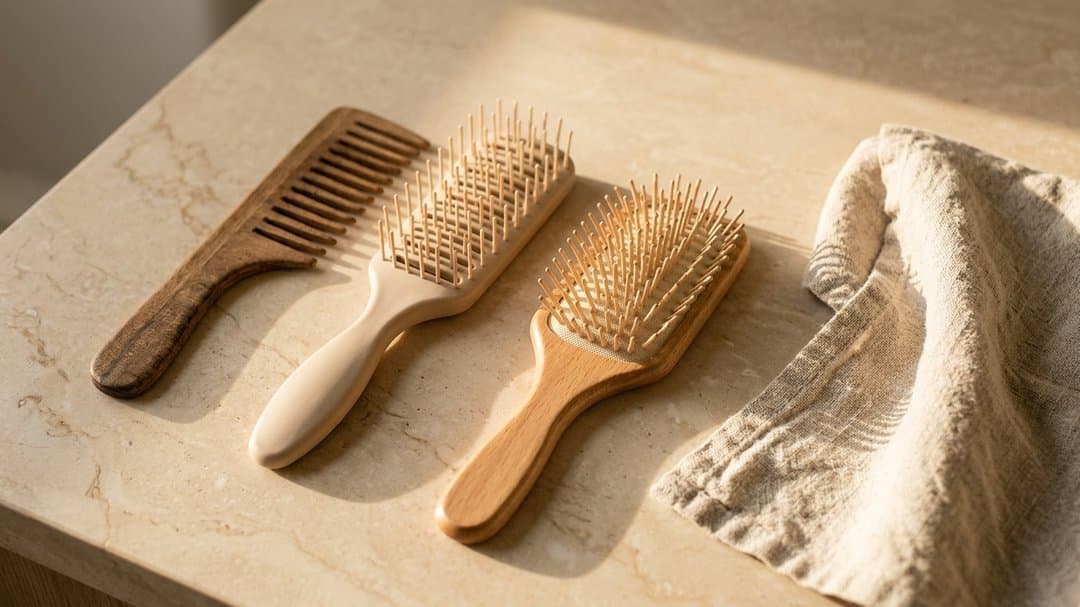
The second is to detangle at night rather than in the morning. A knot you leave alone before bed tightens overnight, and you end up pulling it apart by force on dry hair. Five minutes with a wide-tooth comb on slightly damp hair, working from the ends up, saves you the morning and half of what would otherwise end up in the comb.
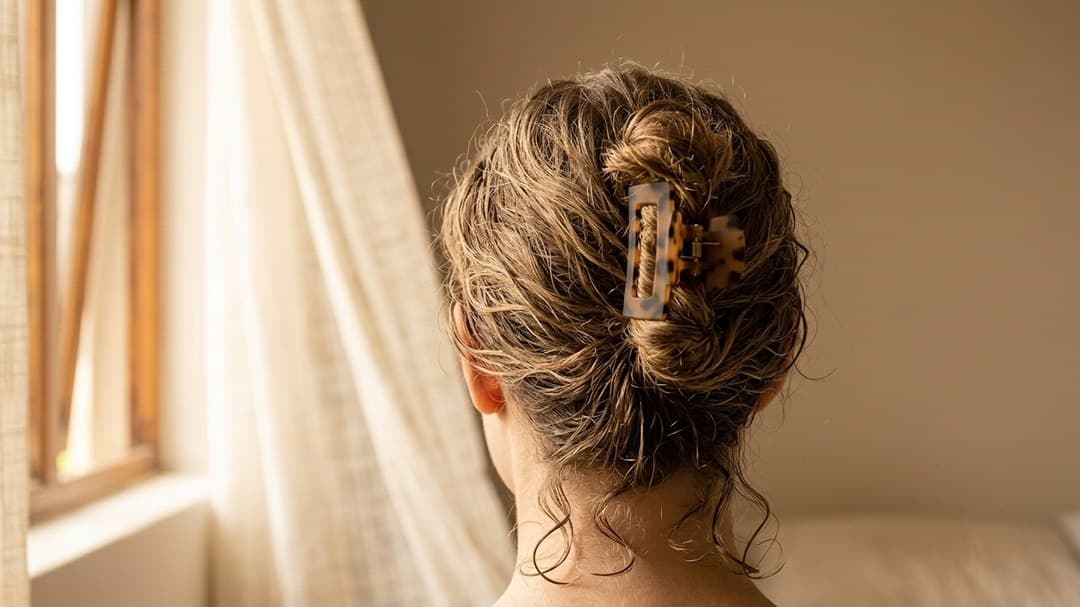
The third is to gather it. Not tightly, and not with a thin elastic that leaves a kink. A loose bun high on the head, a soft braid, a couple of twists — all of these cut down the area your hair drags across the fabric. The less a section moves overnight, the less reason it has to frizz.
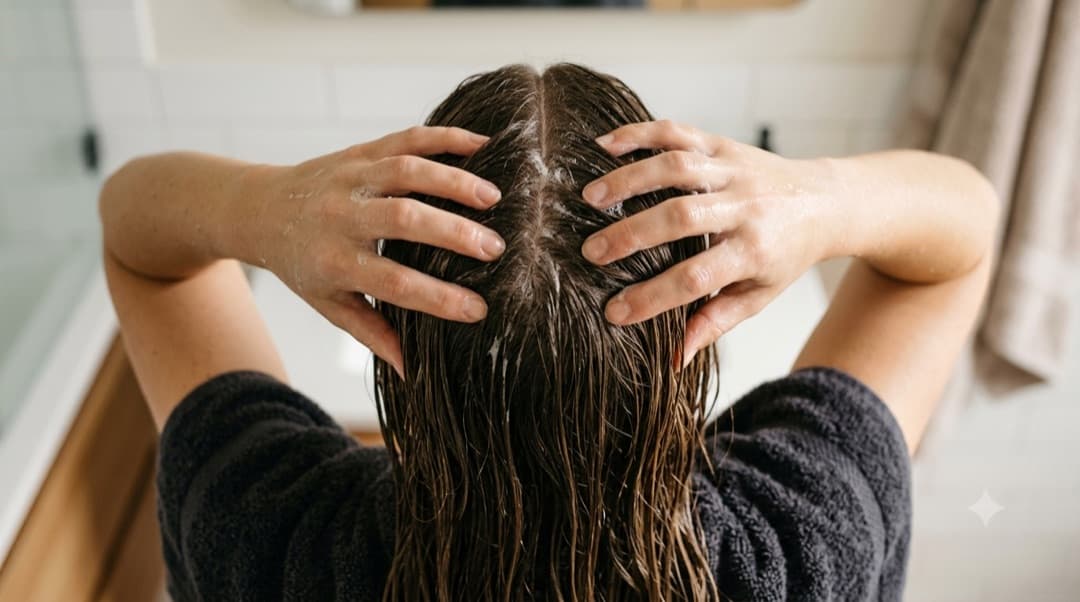
One thing not to do is go to bed with wet hair. Wet hair is weaker than dry, stretches further and gives way under less force, and you spend the night pressing it flat under the weight of your head. Between lying down damp and drying it first, drying it first costs less.
In the morning, don't reach for a comb straight away. Give your hair a minute to fall out, separate it with your fingers, and wet your palms and run them over the places that need it. At that stage a comb usually does more harm than good.